
Do I really need a trademark? It’s one of the most common questions we hear from clients. By Hannah Lee


Sometimes what people are really asking is:
“Do I need a USPTO trademark registration?”
“Can I enforce rights in my brand name or logo without registering?”
The short answer is yes — you may already have trademark rights under common law if you’re using the mark in connection with goods or services.
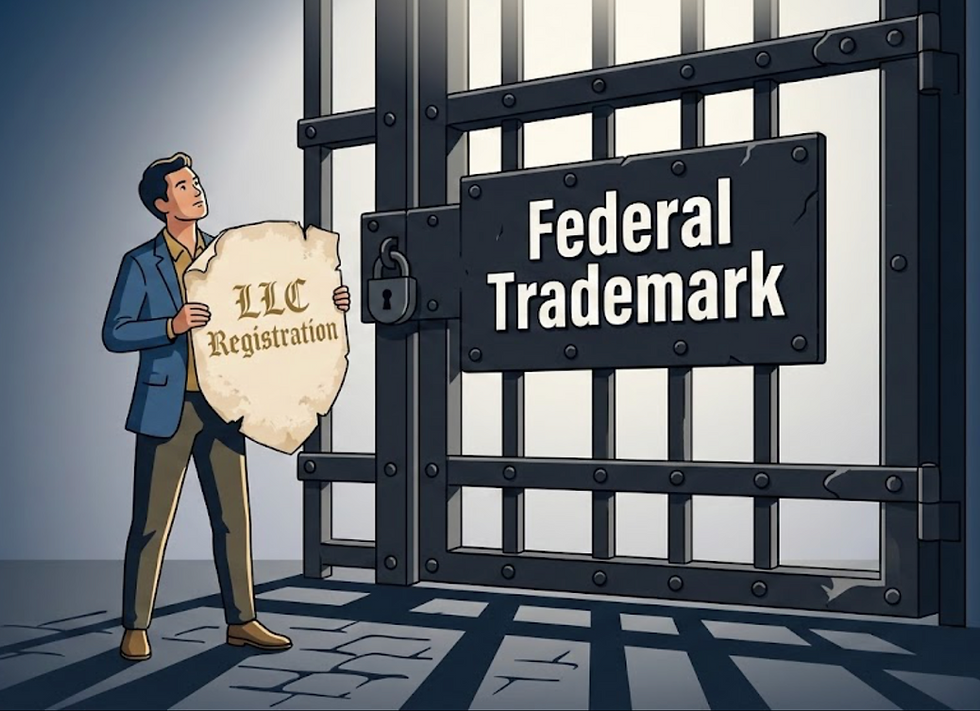
The longer answer is that if you want stronger, nationwide protection and broader enforcement power, you should consider federal (and sometimes international) trademark registration.
What are common law trademark rights?
Common law rights can arise automatically when you start using a name, logo, or slogan to identify your goods or services in the marketplace. You don’t need to file anything to begin building these rights — they come from use.
That said, common law rights are typically limited in scope. They may include:
Protection for unregistered marks under Section 43(a) of the Lanham Act, which covers false designation of origin and unfair competition.
State law claims, which are often focused on local or regional disputes.
The ability to use the ™ symbol to show you’re claiming trademark rights (but not the ® symbol, which is reserved for federally registered marks).
In practice, common law rights are usually strongest where you are actually doing business, and enforcement can be more complicated if someone adopts a similar name elsewhere in the U.S.
Why register your trademark with the USPTO?
A USPTO registration is far more than a formality. It is a powerful legal asset that protects the words, logos, and symbols your customers rely on to recognize your brand.
Key benefits include:
Public notice of your claim of rights through the USPTO database.
A stronger, more defensible intellectual property portfolio for your business.
Nationwide priority and protection, regardless of the specific states where you currently operate.
Expanded enforcement tools, including stronger remedies in federal court.
The right to use the ® symbol once registration issues.
A constructive first-use date tied to your filing date, giving you priority advantages over later users.
The ability to seek “incontestable” status after five years of continued use (for marks on the Principal Register), which can significantly strengthen your position against challenges.
Real-world platform benefits for registered trademarks
Federal registration is also a practical business tool, especially online. Major platforms increasingly require a registered trademark — or at least a pending USPTO application — before granting access to enforcement systems.
Here’s how registration helps in the real world:
Amazon – Access to Amazon Brand Registry and anti-counterfeiting programs like Project Zero generally requires an active registration or a pending application on the Principal Register. – These tools help brands detect and remove infringing listings faster and more effectively.
Meta (Facebook and Instagram) – Meta’s Brand Rights Protection program is designed to help businesses protect trademarks across its platforms. – Eligibility typically requires ownership of an active registered trademark.
TikTok – TikTok usually requires proof of trademark registration before processing infringement reports.
Domain names – Trademark owners can use the Uniform Domain-Name Dispute-Resolution Policy (UDRP) to challenge domain registrations that trade on their brand. – Having a registration (or even a well-supported application) can be a meaningful advantage for establishing priority.
Bottom line
If you’re already using your mark, you may have common law rights — but those rights are limited, region-based, and harder to enforce.
If you want broad, nationwide protection, stronger enforcement options, and access to the brand-protection tools that major online platforms now rely on, federal trademark registration is often a smart next step.
If you’d like guidance on whether registration makes sense for your brand, or want help building a filing strategy, feel free to reach out.


Comments