
What is the trademark process — and how long does it take? By Hannah Lee


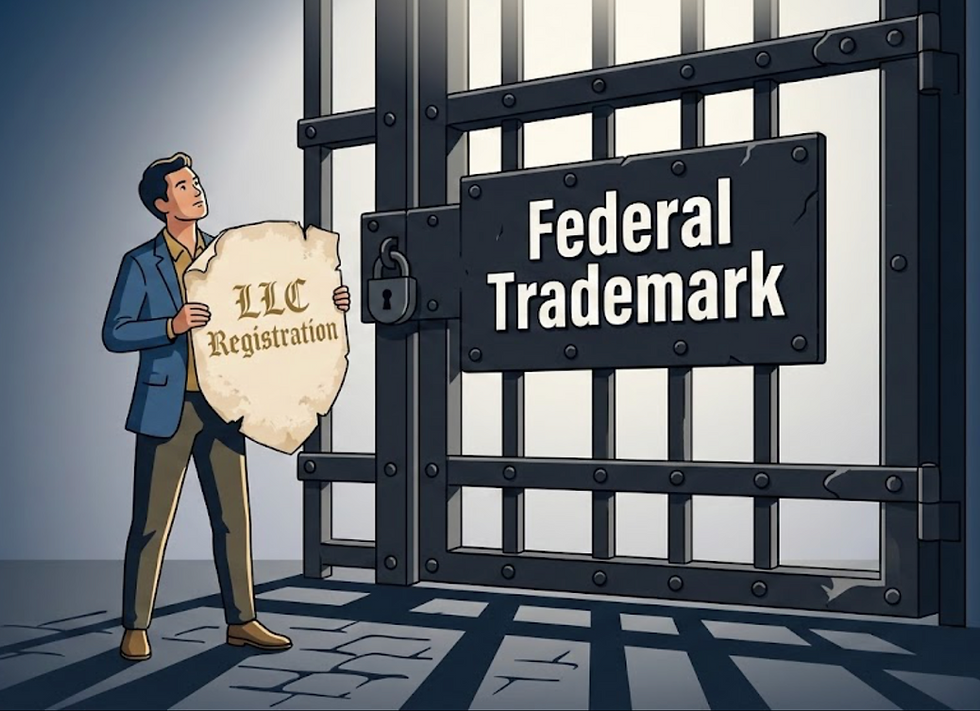
For many businesses, securing a federal trademark is a key step in protecting a brand they plan to invest in for years. Understanding how the USPTO process works helps set expectations, budget intelligently, and avoid preventable delays.
How long does a USPTO trademark usually take?
In most cases, a federal trademark application takes about 12 to 18 months from filing to registration. Some applications move faster, and others take longer depending on office actions, oppositions, or other complications.
A big reason for that timeframe is the USPTO pipeline. The agency receives a very high volume of trademark applications each year, so files wait in a queue before any examiner reviews them. USPTO+1
Step 1. Filing your application
Once you file, the USPTO assigns a serial number and your application enters the examination queue. Filing date matters because it becomes your priority date once the application is approved. USPTO
Step 2. Waiting for the first examination
Your application will generally sit in line for several months. Current USPTO data shows first action pendency averaging roughly 6–7 months from filing to the first substantive review. USPTO+1
When an examining attorney reviews the application, they look for two main things:
technical compliance (owner info, specimen requirements, identification of goods/services, classification, etc.)
legal conflicts, especially likelihood of confusion with earlier filed or registered marks. USPTO+1
Step 3. Office Actions (if any)
If the examiner finds issues, the USPTO issues an Office Action. This is a formal letter explaining what must be corrected or defended before the application can move forward. USPTO+1
Office Actions fall into two broad buckets:
Non-substantive or technical issues (examples include clarifying the goods/services description, fixing classification problems, or disclaiming descriptive wording)
Substantive refusals (examples include likelihood of confusion, descriptiveness, or failure to function)
You typically have three months to respond, with an optional three-month extension available for an added fee. If no response is filed on time, the application is abandoned. USPTO+1
Step 4. Publication for opposition
If the examiner approves the application, it is published in the Trademark Official Gazette. Publication starts a 30-day opposition period in which third parties can challenge the registration if they believe it conflicts with their rights. USPTO+1
Most marks pass through publication without an opposition. But when an opposition is filed, the process can extend significantly because it triggers a TTAB proceeding.
Step 5. Registration or Notice of Allowance
What happens next depends on the filing basis:
Use-based applications
(Section 1(a)) – if you already submitted acceptable proof of use, the USPTO issues the registration certificate shortly after the opposition window closes. USPTO+1
Intent-to-use applications
(Section 1(b)) – the USPTO issues a Notice of Allowance. From there, you have six months to file a Statement of Use showing real-world use, or to request an extension. Up to five extensions are allowed, giving a total of three years to prove use before registration. USPTO
Why the process feels long (and how to keep it moving)
Even though 12–18 months sounds hefty, most of that time is passive waiting for the USPTO to review your file. The active steps are straightforward and manageable.
Two practical ways to avoid delays:
Do a clearance search before filing to reduce the risk of a confusion refusal
Respond quickly and thoroughly to any USPTO correspondence
Bottom line
The trademark process is not instant, but the payoff is meaningful: nationwide rights, stronger legal presumptions, and the confidence to keep building your brand without constantly looking over your shoulder. With informed planning and timely responses, your application can move smoothly from filing to registration.


Comments